![Organic farming protects the land and the livelihoods of producers [Mexico]](/jp/action/resource/1.jpg)
Next article
Bringing the joy of continuous learning to children [Nepal]
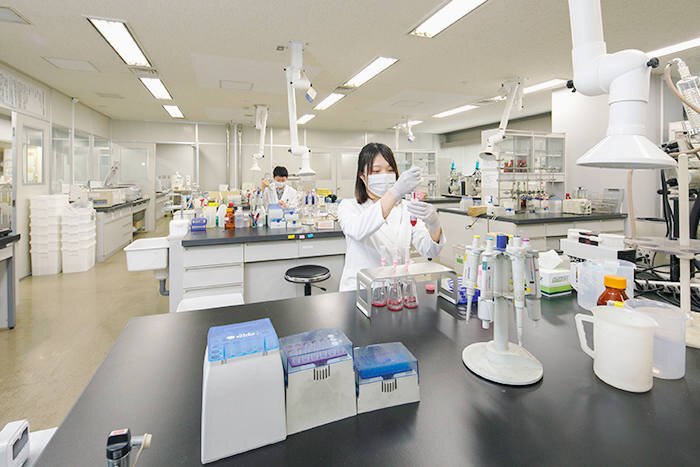
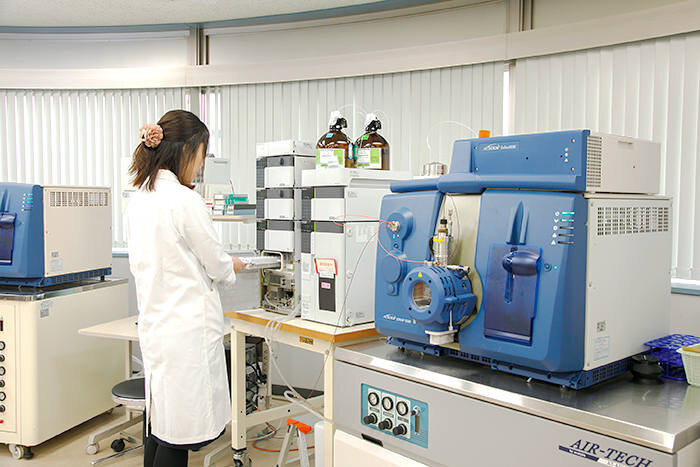
Zensho Group prioritizes "food safety" above all else. To verify the safety of the ingredients it uses, it established "the Central Research Center" in Kawasaki City, Kanagawa Prefecture in 2006.
At the Central Research Center, various tests are conducted to ensure that no harmful substances are present in problematic amounts. These tests include "residual pesticide testing," primarily for vegetables; "veterinary drug testing," which examines pharmaceuticals used to treat livestock that are used as food ingredients; "heavy metal testing"; "radiation testing"; and "genetically modified crop testing," which checks for contamination of raw materials. The range of tests is extensive. By conducting these tests here, we can take full responsibility for the quality and safety of all raw materials.
This time, we spoke with Misa Matsuki, a staff member of the Group's Food Safety Assurance Division, who is involved in food analysis here at the Central Research Center, about her work at the center.
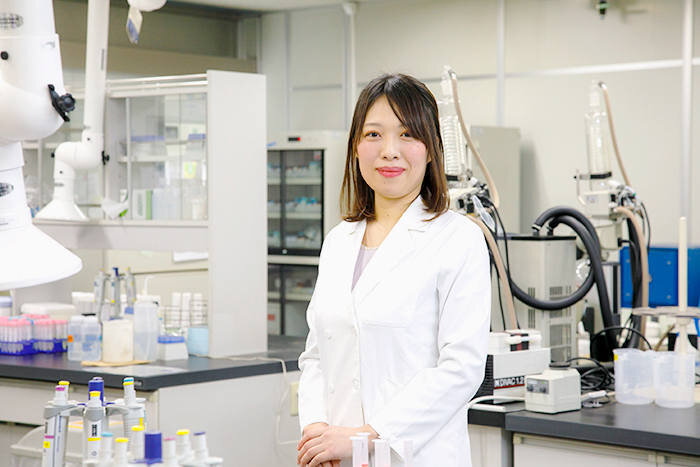
"At the Central Research Center, we have introduced state-of-the-art analytical equipment for the food service industry and pursue 'food safety' to the point of conducting analyses even more rigorously than the standards set by the government. Through advanced analysis, we can quickly detect even small changes in the risks of ingredients and play a part in creating a system that provides safe food by urging countermeasures to be taken in each department."
Matsuki, who was assigned to the Central Research Center immediately after joining the company and will soon have been there for two years, mainly performs heavy metal testing, but also handles testing for pesticide residues and veterinary drugs. She says that while handling various tasks, she sometimes struggles to produce satisfactory test results.
"When I don't get the results I want, I sometimes feel immature because I lack the ability to analyze why things went wrong. In those times, I consult with my superiors and seniors, but they don't give me the answers. Instead, they give me hints to help me develop my thinking skills. By cherishing those hints, researching on my own, and solving the problems, I feel like I'm growing every day."
Because there are so many combinations of ingredients and analysis parameters, existing analytical methods often fail. Matsuki solves these problems on her own, constantly considering, verifying, and improving their methods to ensure that accurate analyses are always performed. With the support of those around her, she can overcome operational and personal challenges, thereby raising the overall level of the Central Research Center.
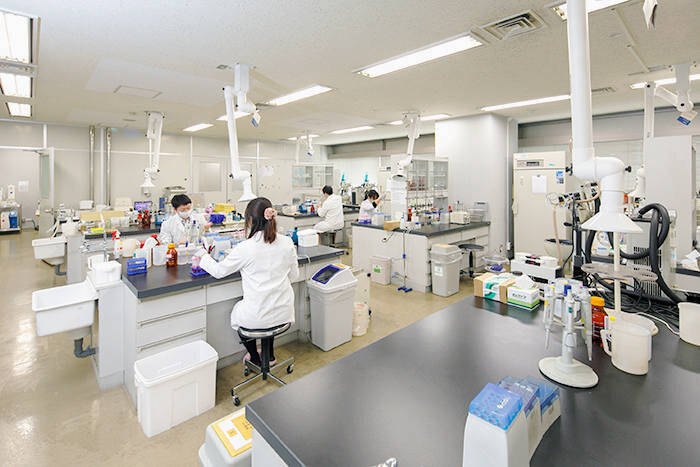
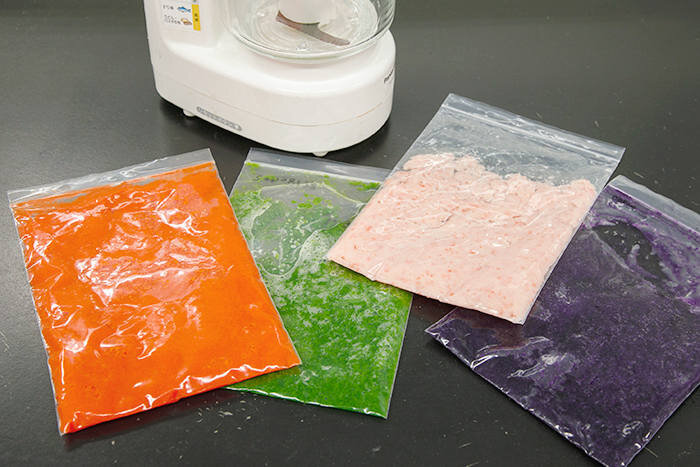
All analyses are divided into three stages: homogenization, pretreatment, and measurement. The first step is homogenization. Even within a single food item, there may be areas where pesticides or other chemical substances are present and areas where they are not. By processing the food into a paste using a food processor and homogenizing it, we prevent any missed targets.
In the next step, "pre-treatment," solvents are added to the food ingredients to dissolve pesticides and other components. Since these also contain food-derived components that interfere with the analysis, they are adsorbed and removed. After that, "measurement" is performed using high-level analytical equipment. Staff member Matsuki explains the advantages of introducing high-level analytical equipment.
"The biggest advantage is the speed. While pre-processing involves removing food-derived components, using high-level analytical equipment allows us to detect pesticides and other contaminants even with simplified pre-processing. Depending on the food, pre-processing time can be significantly reduced. Furthermore, measurements can be taken much faster. Maintaining high accuracy while meeting stringent requirements is only possible with high-level analytical equipment."
Previously, we spent half a day on "pre-processing" and more than a day on "measurement," but with the introduction of high-level analytical equipment, we can now shorten the time to the point where we can start in the morning and get results by the evening. This speed is especially important for analyses that require urgency.
"In a recent example, at the end of January this year, there were reports that pesticide levels exceeding the standard were detected in Tochigi Prefecture's Tochiotome strawberries. Although Zensho Group did not handle the Tochiotome strawberries in question, we immediately tested the strawberries we were using. We were able to confirm their safety on the same day. The fact that we can deliver peace of mind to our customers so quickly is thanks to our high-level analytical equipment."
At the Central Research Center, which ensures food safety, accurate analysis is always required.
“My top priority is ensuring that I never produce incorrect results. It is absolutely imperative that we never overlook residues of pesticides or other substances. I conduct my analyses with a strong sense of responsibility to ‘always deliver accurate results.’ Speed is also crucial. If the analysis process is delayed, it affects the procurement of food ingredients, so my mission is to ‘deliver accurate results quickly.’”
Matsuki, a staff member, goes on to say that her future goals include becoming proficient in all aspects of analytical work and, through that, developing the ability to arrive at conclusions by examining issues from multiple angles.
“I constantly feel firsthand that Zensho prioritizes ‘food safety’ above all else. Food safety isn’t something we compete over with other companies; rather, it’s something the entire industry should work together to improve. I hope to contribute through my work at the Central Research Center so that the Zensho Group—which aims to be the best in the world—can become a leading company that drives the entire food industry forward.”
Impressed by the corporate philosophy of “Eradicating hunger and poverty worldwide” and firmly believing that food safety is essential to achieving this goal, Staff Member Matsuki requested to be assigned to the Central Research Center. Moving forward, she will continue to hone her skills to ensure customer peace of mind and approach food ingredients with unwavering dedication to food safety.
Share this article


![We will continue to weave together the culture of the Lenka people [Honduras]](/jp/action/resource/img_250609_fairtrade_01.jpg)