Next article
Fish farms in Ehime Prefecture: The sea where fish are raised.
HACCP is a hygiene management method in which food businesses themselves analyze and identify hazards such as food poisoning contamination and foreign object contamination, and then manage particularly important processes throughout the entire process from raw material procurement to product shipment to eliminate or reduce these hazards and ensure product safety. HACCP, which spread globally from NASA's research on space food in the 1960s, aims to visualize and manage food hygiene management procedures.
Under the revised Food Sanitation Act, it is necessary to implement "HACCP-based hygiene management" or "hygiene management incorporating the HACCP concept" by June 2020 at the latest.
HACCP has now been institutionalized in many countries and has become an international standard for food hygiene management.
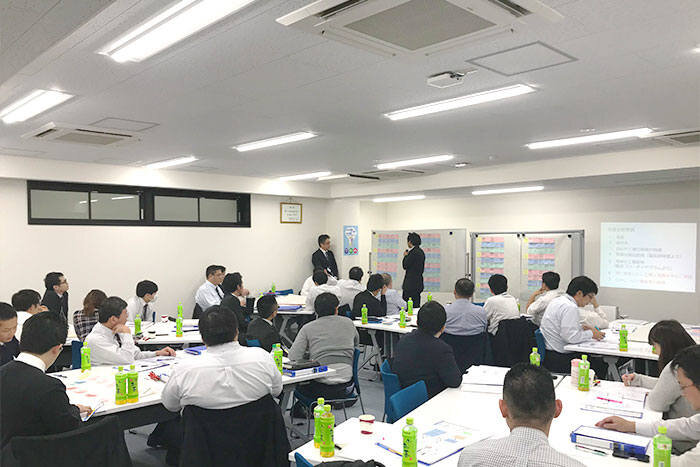
Prior to the institutionalization of HACCP, Zensho 's Group Food Safety Assurance Headquarters, which is responsible for the group's food safety, held training sessions in collaboration with business partners who conduct hygiene management and environmental hygiene inspections at stores.
To ensure a smooth implementation, approximately 30 people, including food safety officers and menu developers from the group's various restaurant companies, participated.
The curriculum is a basic education program for all group employees, based on the HACCP application guidelines of "CODEX," an international food standard jointly created by the United Nations Food and Agriculture Organization (FAO) and the World Health Organization (WHO), with Zensho 's food safety philosophy added in.
The workshop began with a lecture by the Japan HACCP Training Center on "Basic Knowledge and Institutionalization of HACCP," followed by learning about PRP, which is "a method for managing important hygiene management items that must be followed when manufacturing and preparing food." Participants then practically experienced the entire process of HACCP, from "hazard analysis," which is the essential part of HACCP, to "the procedure for determining critical control points (CCPs)," and finally to "creating a HACCP plan for operation and management," through lectures and group work.
Going forward, the Group Food Safety Assurance Headquarters will take the lead in creating a curriculum that can be applied not only to the restaurant business but also to Zensho Group's retail and nursing care businesses. As an entry point to HACCP education for the group, training sessions will be held periodically for all employees involved in food safety.
Tags
Share this article


![We will continue to weave together the culture of the Lenka people [Honduras]](/jp/action/resource/img_250609_fairtrade_01.jpg)
![Aiming for fair trade that gives women's voices a chance to shine [Burundi]](/jp/action/resource/img_260528_fairtrade_01.jpg)