Zensho Fair Trade
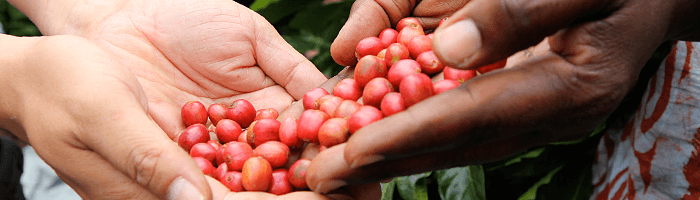
Under the corporate philosophy of "Taking responsibility for the stability and development of human society, helping eradicate hunger and poverty from the world through food."
We engage in fair trade with countries and regions facing social challenges.
What is fair trade?
Fair trade is an activity that aims to improve the lives and economic independence of producers by continuously trading agricultural products and goods produced in developing countries at fair prices that reflect their value and the compensation for their labor.
Zensho Fair Trade
Under its corporate philosophy of "eradicating hunger and poverty from the world," Zensho Holdings engages in direct fair trade partnerships with producers, taking responsibility for all processes from meeting with producers to providing farming advice,procurement, processing, and distribution.
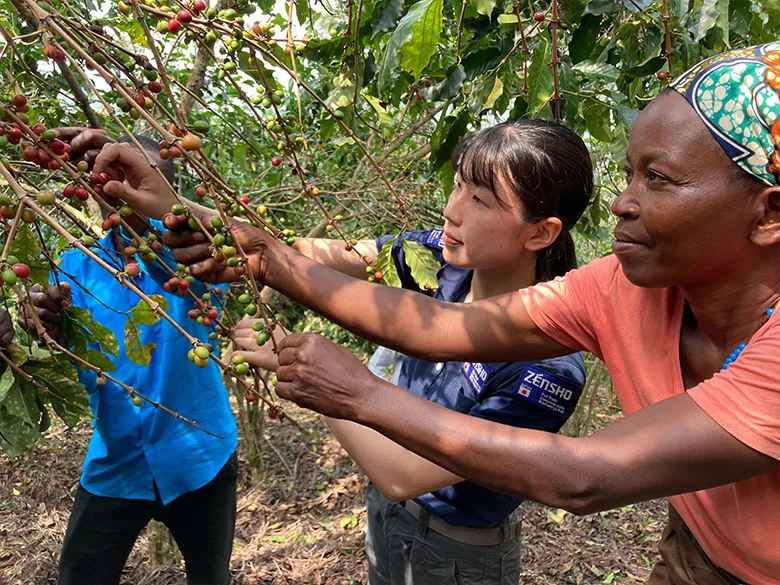
We start by visiting them to understand the issues their countries or regions are facing and to learn about their lives. Our employees then visit the site to inspect every step, including the growing environment, harvesting methods, sorting, and storage—always ready to offer advice on how to improve product quality.
Shifting from the traditional “First World and developing countries” framework in fair trade, Zensho will continue to focus on fair trade in a way that works alongside producers, enabling both sides to address challenges on a more equal footing.
Fair trade that values dialogue with producers
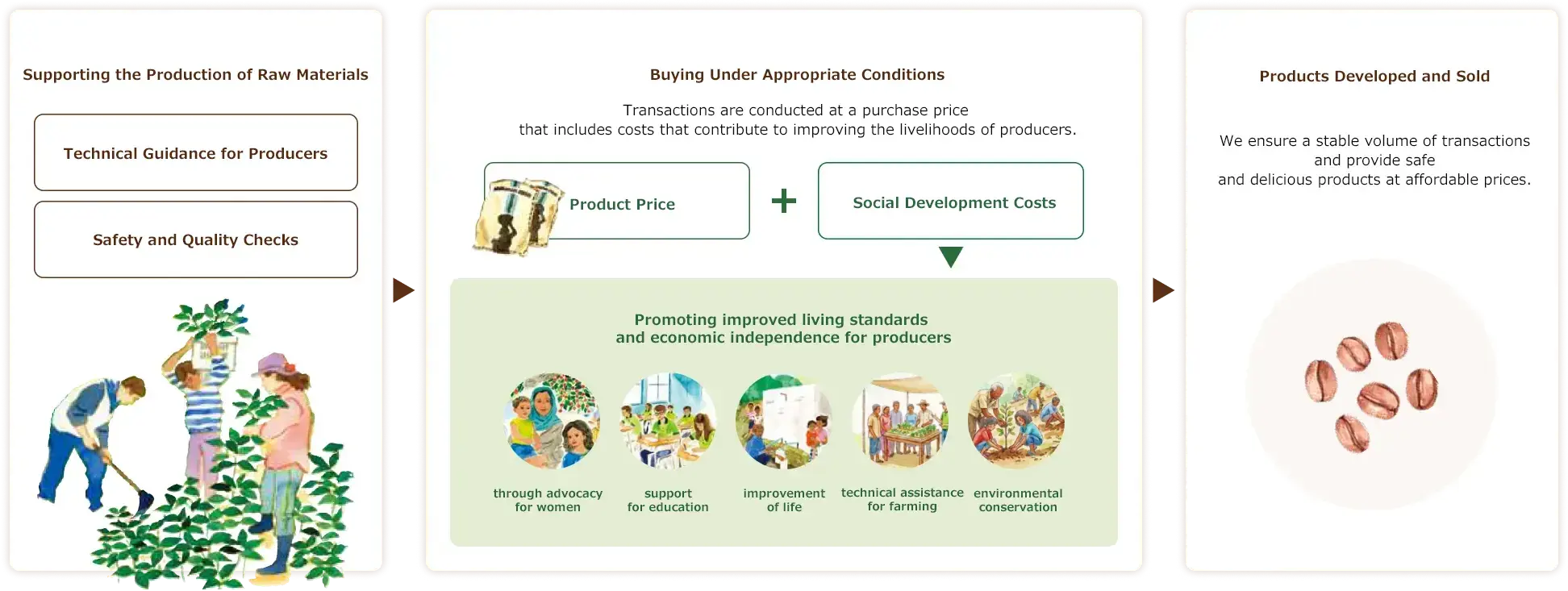
Zensho enters into contracts and partnerships with producer organizations directly or through NGOs, paying them compensation and providing technical guidance.
Furthermore, we aim for long-term business relationships by cooperating with producer organizations in the effective use of their profits, which are designated as "social development costs," and by supporting improvements in producers' incomes and the development of education, healthcare, and basic living infrastructure.
As a result, we have been able to secure a stable volume of transactions and provide safe, high-quality coffee, tea, and other beverages at affordable prices.
Commitment to deliciousness
Safety
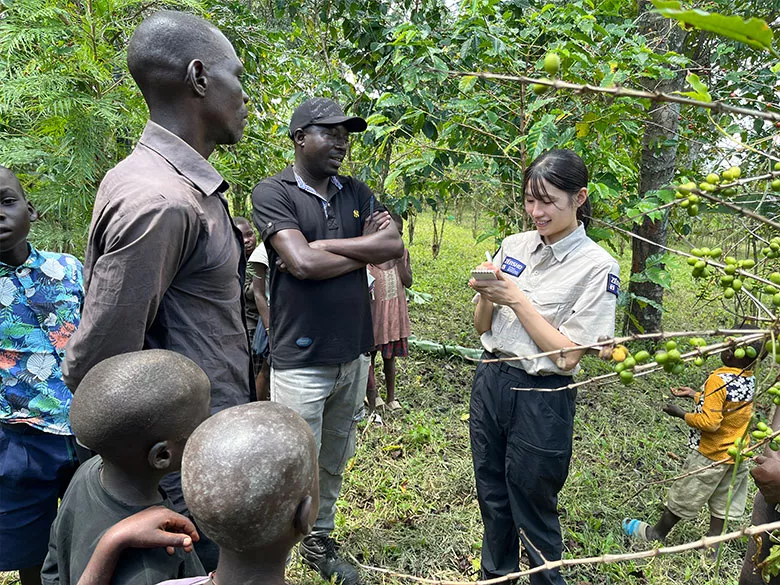
We manage the entire process from production to arrival in Japan, ensuring the safe and secure procurement of coffee beans, tea, and other products.
In this process, we regularly visit the production areas to directly check the condition of the fields and farms, verify the pesticides used, and inspect necessary equipment for storage and transportation, such as burlap sacks and trucks. Furthermore, we conduct residual pesticide checks on sample inspections before shipment, and only import raw materials that pass the inspection.
Furthermore, by promoting organic farming, we prevent health problems caused by pesticides for producers and ensure safety for our customers.
Consideration for environmental protection
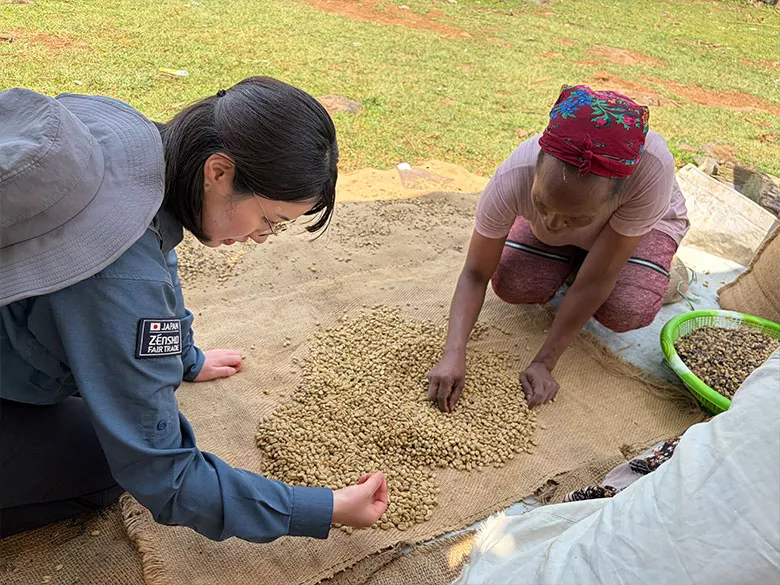
Many of the production areas that Zensho Fair Trade partners with practice sustainable, circular agriculture.
Protecting and expanding organic farming and other natural, cyclical farming methods not only protects people living in production areas from health problems caused by pesticides, but also ensures that the farmland that has been cultivated by our ancestors for generations is passed down to future generations in a healthy state.
To this end, we provide technical guidance on cultivation and processing methods, and support the creation of sustainable agricultural systems that respect the local ecosystem. In addition, as part of this initiative, we encourage obtaining organic certification, and currently source organic JAS certified coffee beans from East Timor, Mexico, Peru, Ecuador, Nicaragua, Rwanda, Tanzania (Kilimanjaro), and Uganda.
We source our black tea from Sri Lanka and Nepal, and our rooibos tea from South Africa, all of which are organically certified by the Japanese Agricultural Standards (JAS).
(As of December 2022)
Partnership
A long-term relationship of trust is essential for fair trade initiatives.
The raw material costs paid by Zensho include not only the costs necessary for production but also social development costs *. These social development costs contribute to the sustainable improvement of the living environment not only for producers but also for local residents.
This allows us to build long-term partnerships with producers.
* social development costs: A portion of the raw-material purchase price is used to fund various social development activities needed by the local population.
Countries Where Zensho Promotes Fair Trade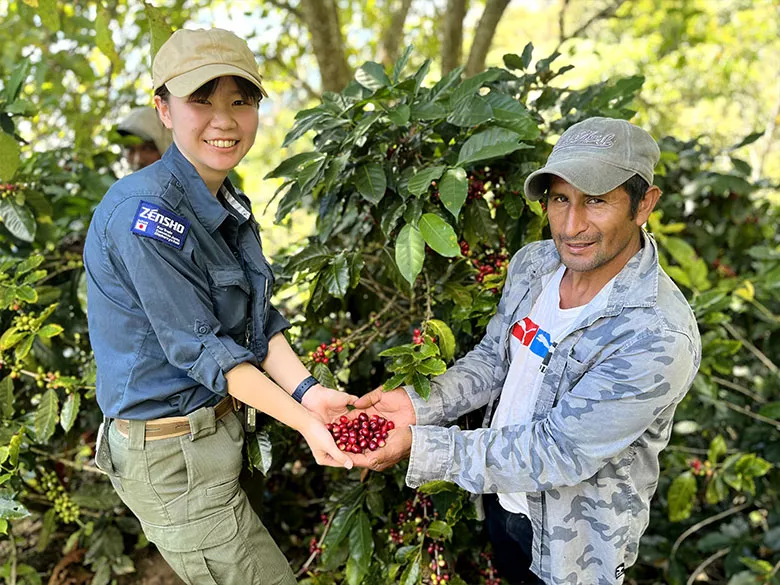
Brands offering fair trade products
You can enjoy Zensho Fair Trade coffee, tea, and rooibos tea, made with meticulous attention to production and brewing methods, at the following Zensho Group stores.
* Some stores may not offer this service.
Coffee
Sukiya

Hama-sushi

Coco's
Nakau

Jolly-Pasta

Big Boy

Victoria Station

Jukusei Yakiniku Ichiban
Olive Hill

Hanaya Yohei

El Torito
Katsu-An
Kyubeya

Denmaru Ramen

Zetteria
Joy Foods
Tea
Coco's
Jolly-Pasta
Big Boy
Victoria Station
Jukusei Yakiniku Ichiban
Olive Hill
Hanaya Yohei
El Torito
Zetteria
Rooibos tea
Coco's
Jolly-Pasta
Big Boy
Victoria Station
Jukusei Yakiniku Ichiban
Olive Hill
Hanaya Yohei
Joy Foods