![Organic farming protects the land and the livelihoods of producers [Mexico]](/jp/action/resource/1.jpg)
Next article
Sukiya provided support to a "children's cafeteria".
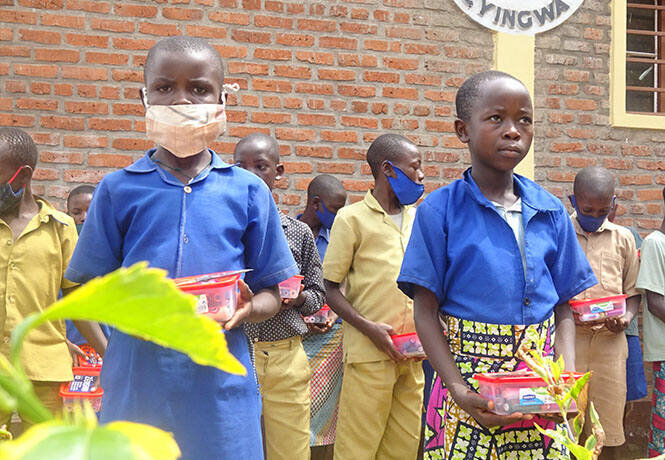
In some coffee-producing regions of Rwanda, there are elementary schools that have built home economics classrooms using social development costs * generated through Zensho 's fair trade program.
The sewing and cooking classes held in this home economics classroom not only help students acquire practical life skills, but also provide opportunities to foster teamwork and self-esteem.
Hearing the voices of those in the region suffering from mask shortages during the COVID-19 pandemic, Zensho has partnered with producers and schools to implement a new initiative: teaching children how to make reusable cloth masks in their home economics classes.
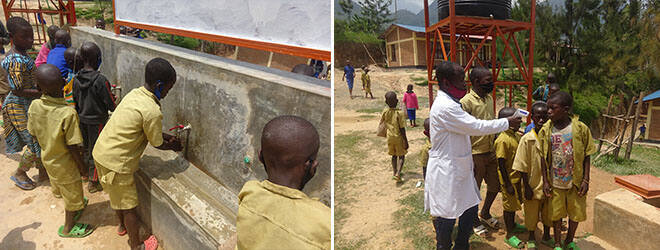
This initiative will enable children to make enough cloth masks to distribute not only to their families and relatives but also to their neighbors. Producers and schools have endorsed the project, recognizing that the children's kindness and skills will help alleviate the mask shortage and contribute to local infection control.
Initially, this initiative was planned to be implemented at one elementary school attended by children of coffee producers, a school that Zensho primarily supports *. However, after receiving the report, the local government requested that it be implemented at other elementary schools in the vicinity of the production area.
As a result, the initiative was decided to be implemented in a total of seven elementary schools.

In this way, sewing kits purchased with social development costs were distributed to each of the 5th and 6th graders (approximately 1,200 students) attending seven elementary schools. Starting in April, they began making reusable, hand-sewn cloth masks as part of their home economics classes. The children made the cloth masks following patterns that took safety and hygiene into consideration.
Children are actively learning how to make masks, bringing leftover fabric and old clothes from home to school in order to make more masks.
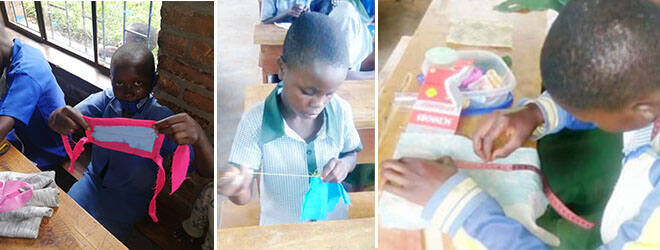
In addition, for children in the fourth grade and below (approximately 4,100 children) who have difficulty handling scissors and needles, cloth masks made using the same paper patterns as the cloth masks made by the fifth and sixth graders were procured locally and distributed.
Going forward, we will focus on expanding the target age range for home economics classes by devising sewing techniques that even younger children can learn.

Zensho will work with producers on a wide range of initiatives to support the healthy development of children living in challenging circumstances, such as ongoing lockdowns. These initiatives include expanding the curriculum of home economics classes beyond sewing and cooking, and planning inter-school exchanges to pass on home economics skills from child to child.
Tags
Share this article


![We will continue to weave together the culture of the Lenka people [Honduras]](/jp/action/resource/img_250609_fairtrade_01.jpg)