![We will continue to weave together the culture of the Lenka people [Honduras]](/jp/action/resource/img_250609_fairtrade_01.jpg)
Next article
Sukiya provides warm Gyudon to mini basketball teams in Aomori Prefecture.
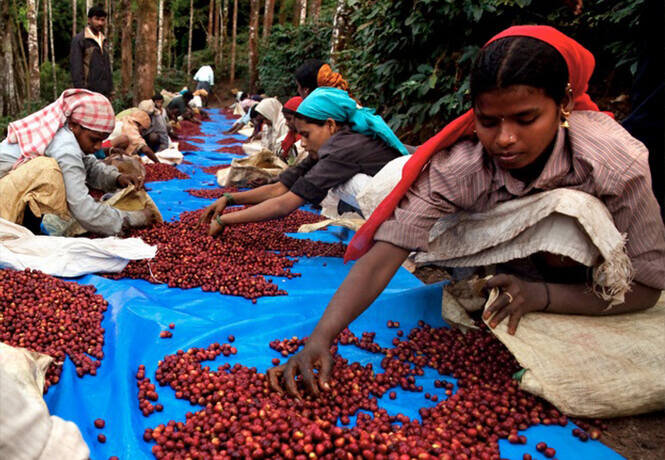
India is said to have widespread and deep-rooted remnants of a religious caste system and occupational hierarchy. Even today, when discrimination based on these systems is prohibited by the Constitution and preferential treatment programs to address inequality are in place, many people in rural areas—where job options are limited—continue to work as laborers bound by their family background and birth.
Zensho Since 2013, we have been engaging in Fair Trade in partnership with farm owners committed to improving the living conditions of coffee farm workers.To ensure that workers living on the farms and their children can lead culturally rich lives in a safer and more secure environment, we make regular visits to the area to gain firsthand insight into the issues. By working together to determine how best to utilize social development costs, we are able to provide more effective support.
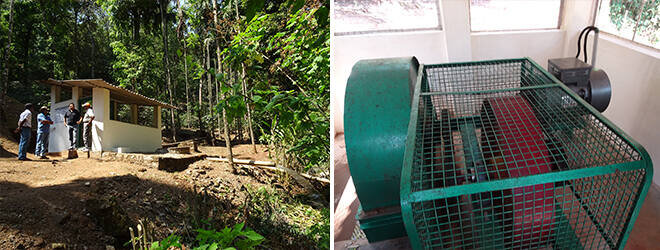
The first project we undertook with the farm owner was the construction of a small-scale hydroelectric power plant, which was completed in 2014. The installation of this generator has enabled approximately 50 people from 17 households living in the workers' quarters on the farm to have a stable supply of electricity, allowing them to light their outdoor and indoor lights at any time.
Even though they live in a row house deep in the farm where newspapers don't reach, the 17 households living there now have access to televisions to watch the news and electric mixers to grind spices essential for cooking. As a result, their living conditions have improved.
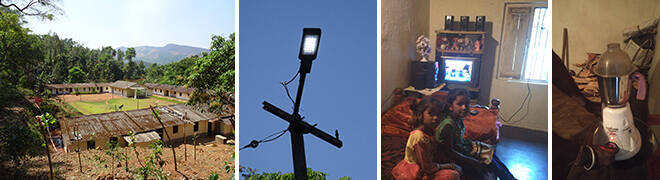
Completed in 2015, the "Smart Study House" is a learning support facility for children aged 6 to 13, where various classes are held for children who gather after school. The building also serves as a daycare center, contributing to creating an environment where workers with children can participate in agricultural work with peace of mind.
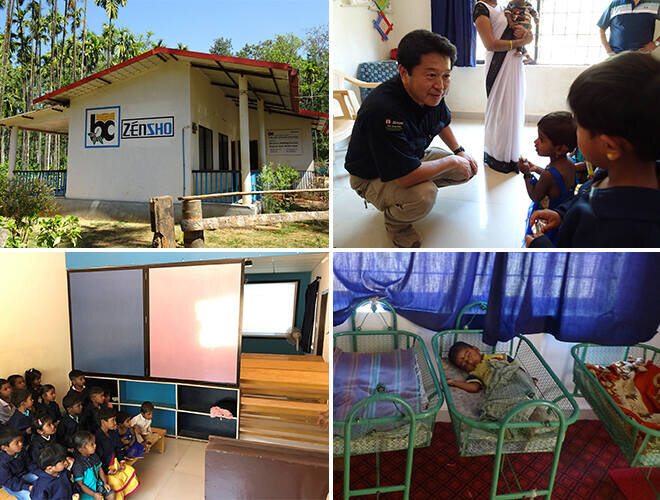
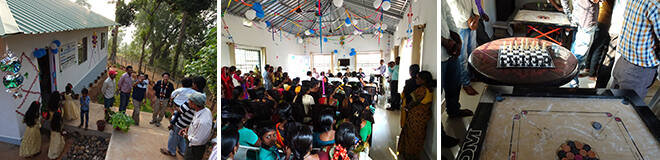
The "Recreation Center," completed in 2018, is used as a place where children can play and study together even on rainy days. At the opening ceremony, held to coincide with a visit by a representative from Zensho Fair Trade, approximately 130 people, including farm workers and their children, gathered at the center, which was decorated both inside and out with balloons and paper streamers, for a ceremony conducted in the style of traditional Indian architecture. The "Recreation Center" is a multi-purpose hall where people can play board games such as chess and watch television together.
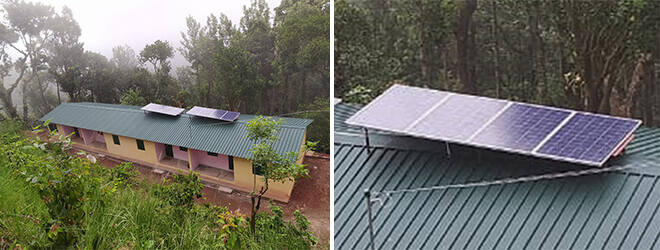
This year, social development costs were also used to build a new row house equipped with solar panels for the migrant workers who come to the farm every year. The solar panels have a power generation capacity of 3kWh and are equipped with a large-capacity 150Ah battery, so that lights can be kept on in all four rooms, including the kitchen, toilet, and living room, even after sunset. After the restrictions on movement due to the spread of the coronavirus are lifted, 24 workers are scheduled to live in this row house.
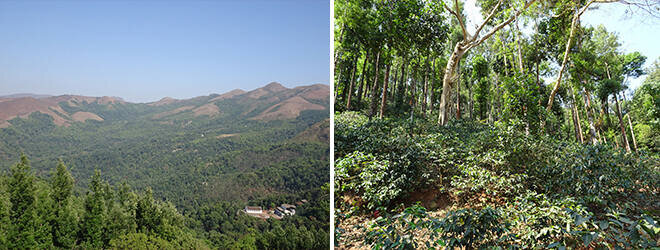
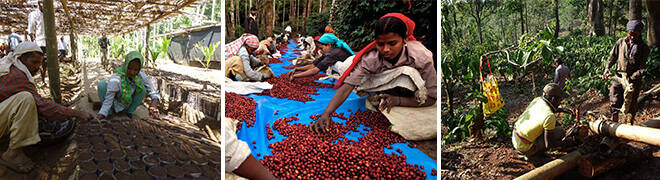
Located at the southern tip of the Deccan Plateau on the Indian peninsula, this farm is situated in Bababudangiri, considered the birthplace of Indian coffee, a region with a long history of cultivating high-quality coffee beans. This farm, through its unique systems and the hard work of its laborers, produces flavorful coffee beans characteristic of Indian coffee.
Zensho will continue to work with farm operators in consultation with them, and through the fair trade system, will cooperate in improving the living conditions of workers and creating an environment where their children can live healthy and culturally enriching lives.
Share this article


![Aiming for fair trade that gives women's voices a chance to shine [Burundi]](/jp/action/resource/img_260528_fairtrade_01.jpg)
![Creating a sustainable society through environmentally conscious coffee production [Tanzania]](/jp/action/resource/img_260312_fairtrade_01.jpg)