See other ingredients
Eel
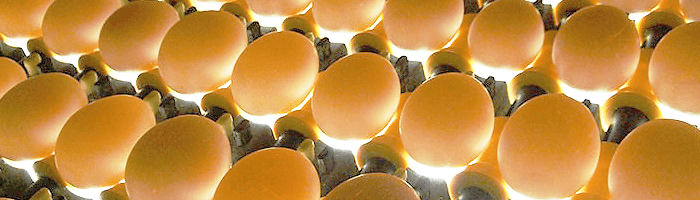
High quality control and hygiene management are in place.
We use eggs sourced from poultry farms and GP centers.
Raising healthy chicks is the first step in delivering safe eggs. During audits, we verify the health management and vaccination programs to ensure the chicks grow up healthy. We also check the safety of the feed given to the chicks through inspection reports and other documents.
Nutritionally balanced and delicious, eggs are a popular food item across all generations. Because eggs are often consumed raw, proper handling is essential. Zensho Group uses eggs sourced from GP centers* where hygiene and quality control are properly maintained.
*GP Center… This is an abbreviation for Grading and Packing Center, a facility that sorts and packages chicken eggs. It is responsible for the process from receiving eggs from poultry farms to shipping them out.
To maintain the health of our chickens, we strictly control temperature, humidity, and hygiene. We also monitor the overall hygiene and management practices of our chicken coops in accordance with the Ministry of Agriculture, Forestry and Fisheries' guidelines for livestock management.
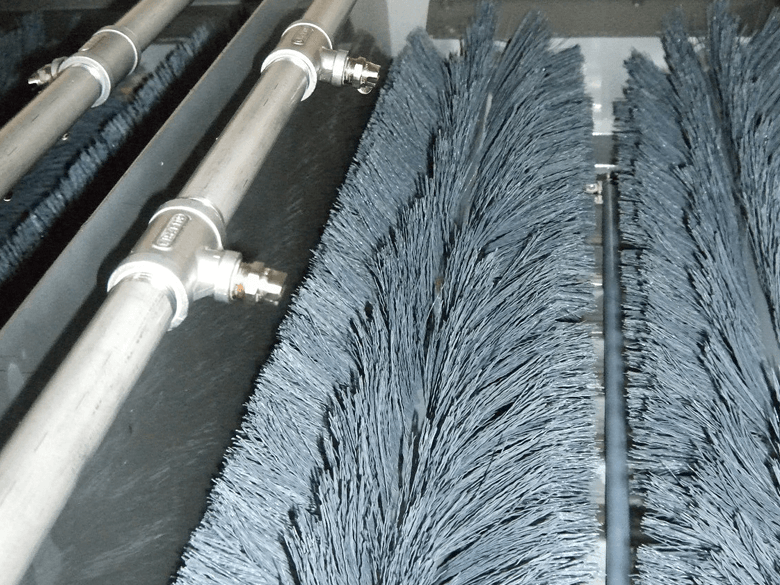
In accordance with the guidelines of the Ministry of Health, Labour and Welfare, we rinse the eggshells with warm water disinfectant (hypochlorous acid solution*) while brushing off any dirt from the surface, killing Salmonella and other bacteria that can cause food poisoning.
*Hypochlorous acid is used for disinfecting tap water, vegetables, and fruits.
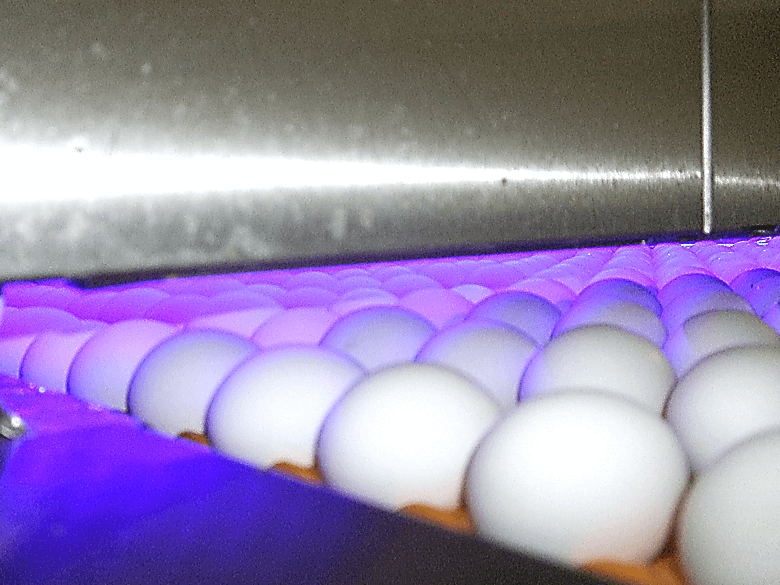
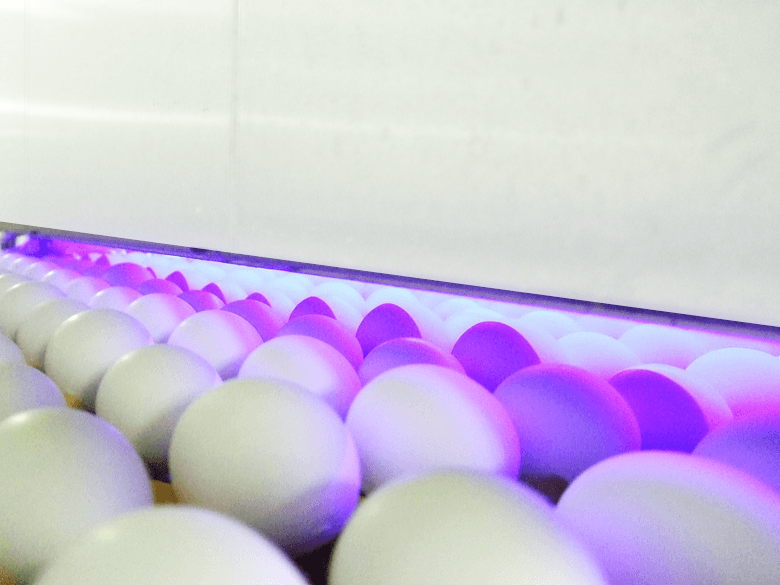
The drying process is carried out quickly, so the eggs do not deteriorate. Furthermore, the surface of the eggshells is sterilized again with ultraviolet light.
Cracks are the biggest enemy of eggs. Bacteria can easily enter through cracks, causing a decrease in freshness. To detect even small cracks, we visually inspect the eggs by shining a light from below in a dark room. In addition, we remove blood eggs* by using spectroscopic analysis, which analyzes the contents of the egg by shining light on it and analyzing the wavelength.
*Blood eggs... These are eggs that contain blood. Blood eggs are often seen when chickens are under temporary stress.
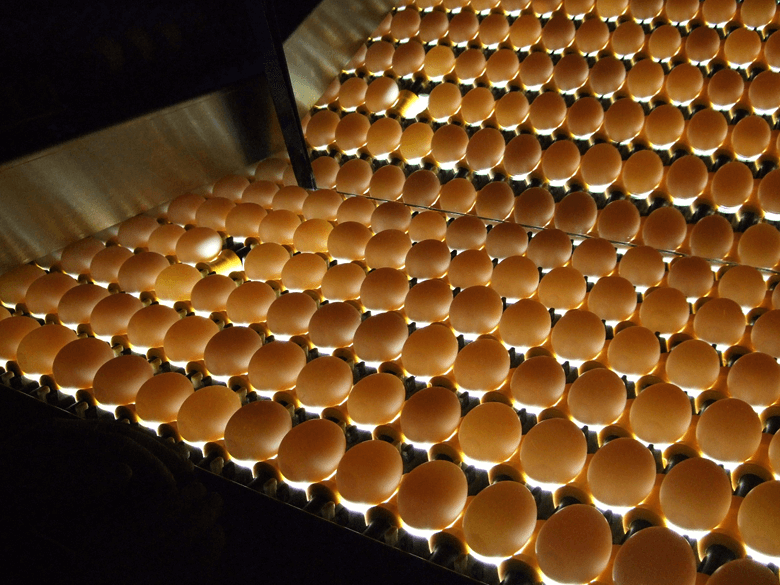
Furthermore, a cracked egg detector is used to tap the eggshells, detecting cracks from the reverberation sound, and any cracked eggs are removed. Additionally, a soiled egg detector is used to detect and remove any eggs that are still soiled.
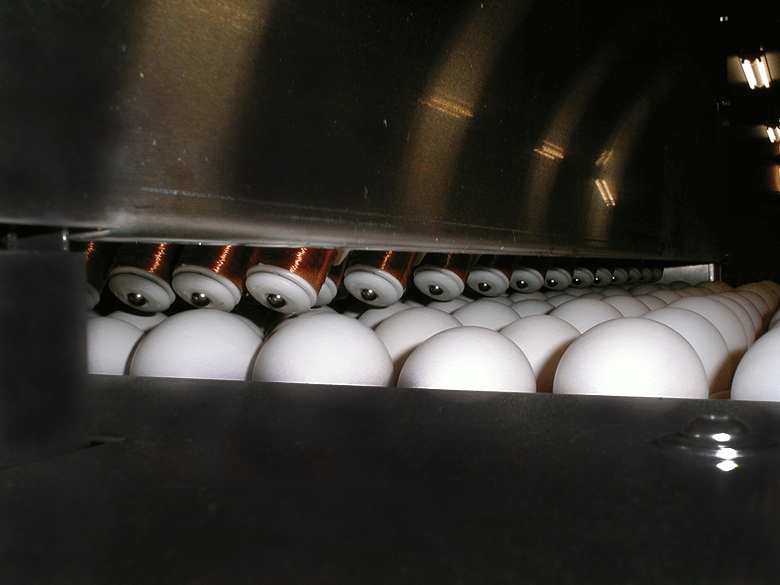
A machine checks to ensure that the correct number of eggs are in each box. After that, the eggs are checked to make sure they are not broken and that the correct number is present before being packed into cardboard boxes.
Egg freshness is greatly affected by temperature, and eggs tend to deteriorate more quickly when stored in high temperatures. Temperature control is crucial to delivering "safe eggs," so GP Centers maintain appropriate temperature control.